
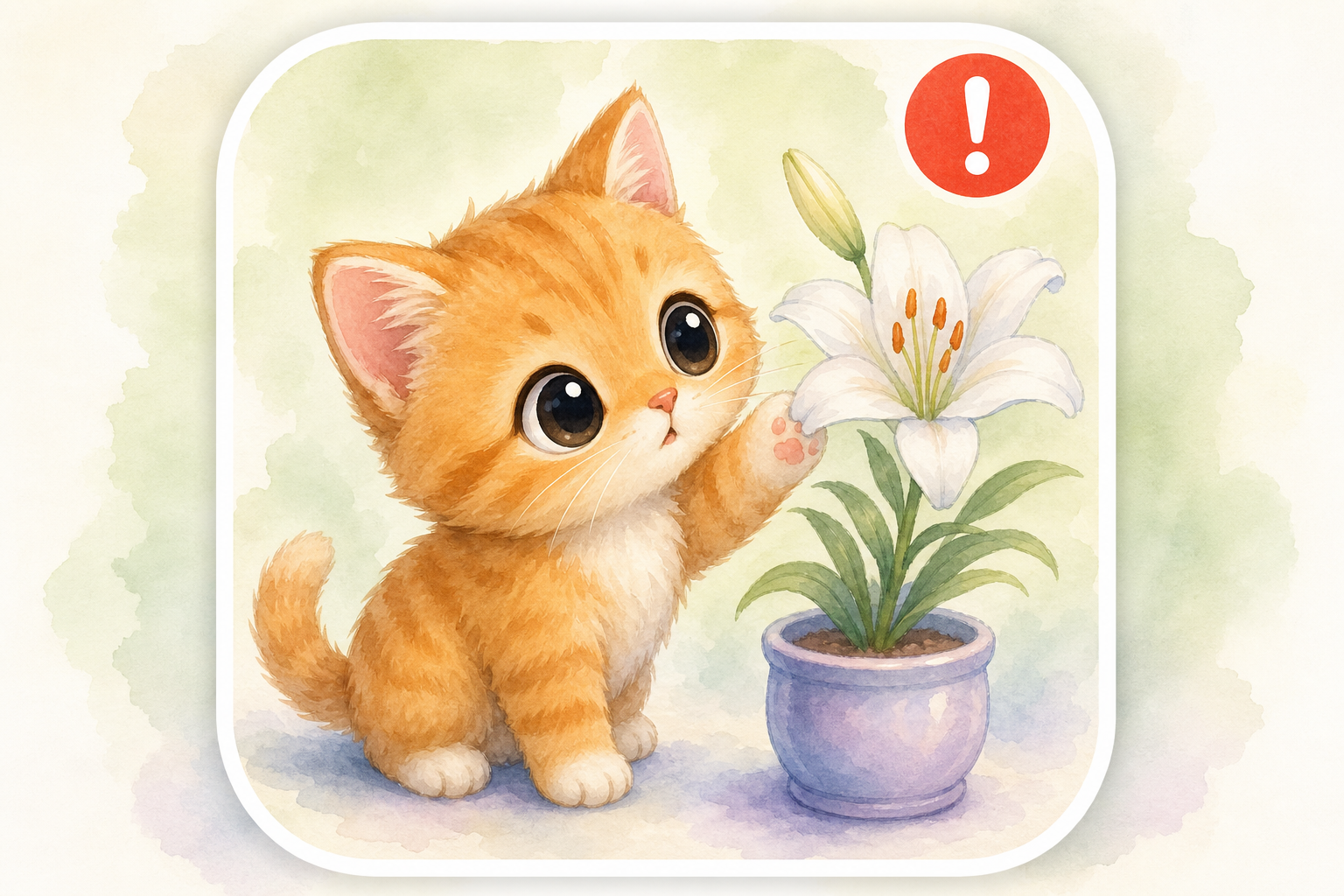
Important
Many lilies are extremely toxic to cats. Even small amounts of pollen, leaves, or water from the vase may be concerning. Contact a veterinarian or emergency veterinary hospital immediately.
Overview
Lily exposure in cats is considered a serious emergency by many veterinary professionals. Toxicity can affect the kidneys and may progress quickly. This includes true lilies and exposure through grooming pollen from fur. If you suspect any lily contact or ingestion, immediate veterinary guidance is appropriate.
Recommended timing
Act now — seek emergency veterinary care immediately if any severe signs above are present.
When emergency veterinary care may be appropriate
- Any suspected lily ingestion, chewing, or pollen contact
- Your cat is vomiting, drooling, or lethargic
- You are unsure what type of plant it was
- Your cat had access to a floral arrangement containing lilies
- Any lily exposure in a cat should be treated as urgent until a veterinarian advises otherwise
What to tell your veterinarian
- The type of lily if known, or a photo of the plant
- What part of the plant your cat may have contacted
- Time since exposure
- Current symptoms
- Your cat's age, weight, and medical history
What to have ready
- Your pet's current weight (or a recent estimate)
- List of medications your pet takes
- When symptoms started or when exposure occurred
- Any packaging, labels, or product information (for toxins or foreign objects)
- Photos or videos of symptoms, if safe to capture
- Photo of the plant or floral arrangement if available
What not to do
- Do not wait to see if your cat seems fine
- Do not attempt home treatment
- Do not assume outdoor lilies are safer than indoor ones
- Do not delay because only a small amount was involved
Learn more from trusted sources
These are educational resources from licensed veterinary organizations and animal poison control experts. Paw Navigator is not affiliated with or endorsed by these third-party sites.