Important
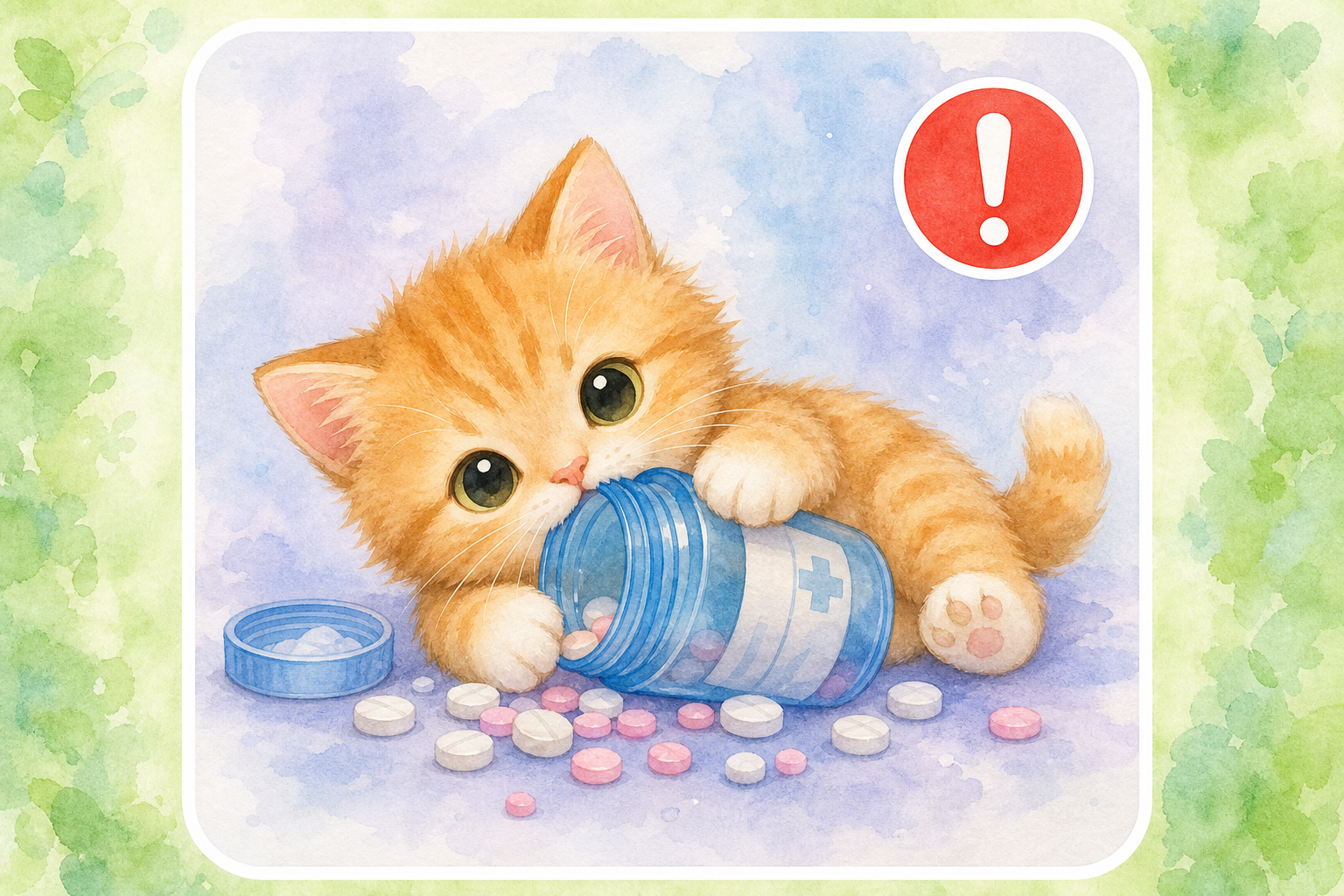
Human medications including ibuprofen, acetaminophen, and antidepressants can be harmful to cats. Contact a veterinarian, emergency veterinary hospital, or animal poison control immediately.
Overview
Many common human medications are not safe for cats and can cause serious effects including stomach ulcers, liver injury, or neurological signs. Cats are often sensitive to drugs that humans take routinely. The specific medication, dose, and your cat's weight matter. Prompt veterinary or poison control guidance helps determine whether evaluation is needed.
Recommended timing
Act now — seek emergency veterinary care immediately if any severe signs above are present.
When emergency veterinary care may be appropriate
- Any ingestion of human pills, capsules, or topical medication licked off skin
- You find chewed packaging or missing pills
- Your cat is vomiting, lethargic, or unsteady
- You are unsure of the dose or number of pills eaten
- Your cat is small, young, or has existing liver or kidney conditions
- Ingestion of acetaminophen (Tylenol) — especially concerning in cats
What to tell your veterinarian
- The medication name and strength (mg per pill)
- Estimated number of pills eaten or amount licked
- Time since ingestion
- Your cat's weight and age
- Any symptoms currently present
- Bring the medication bottle if possible
What to have ready
- Your pet's current weight (or a recent estimate)
- List of medications your pet takes
- When symptoms started or when exposure occurred
- Any packaging, labels, or product information (for toxins or foreign objects)
- Photos or videos of symptoms, if safe to capture
- Medication bottle with strength (mg per pill)
What not to do
- Do not wait for symptoms before calling
- Do not induce vomiting unless specifically directed by a professional
- Do not assume one pill is harmless because of your cat's size
- Do not give other medications to counteract the ingestion
Learn more from trusted sources
These are educational resources from licensed veterinary organizations and animal poison control experts. Paw Navigator is not affiliated with or endorsed by these third-party sites.