
Important
Panting, collapse, vomiting, or weakness after heat exposure may be life-threatening. Move your cat to a cooler area and contact a veterinarian or emergency hospital immediately.
Overview
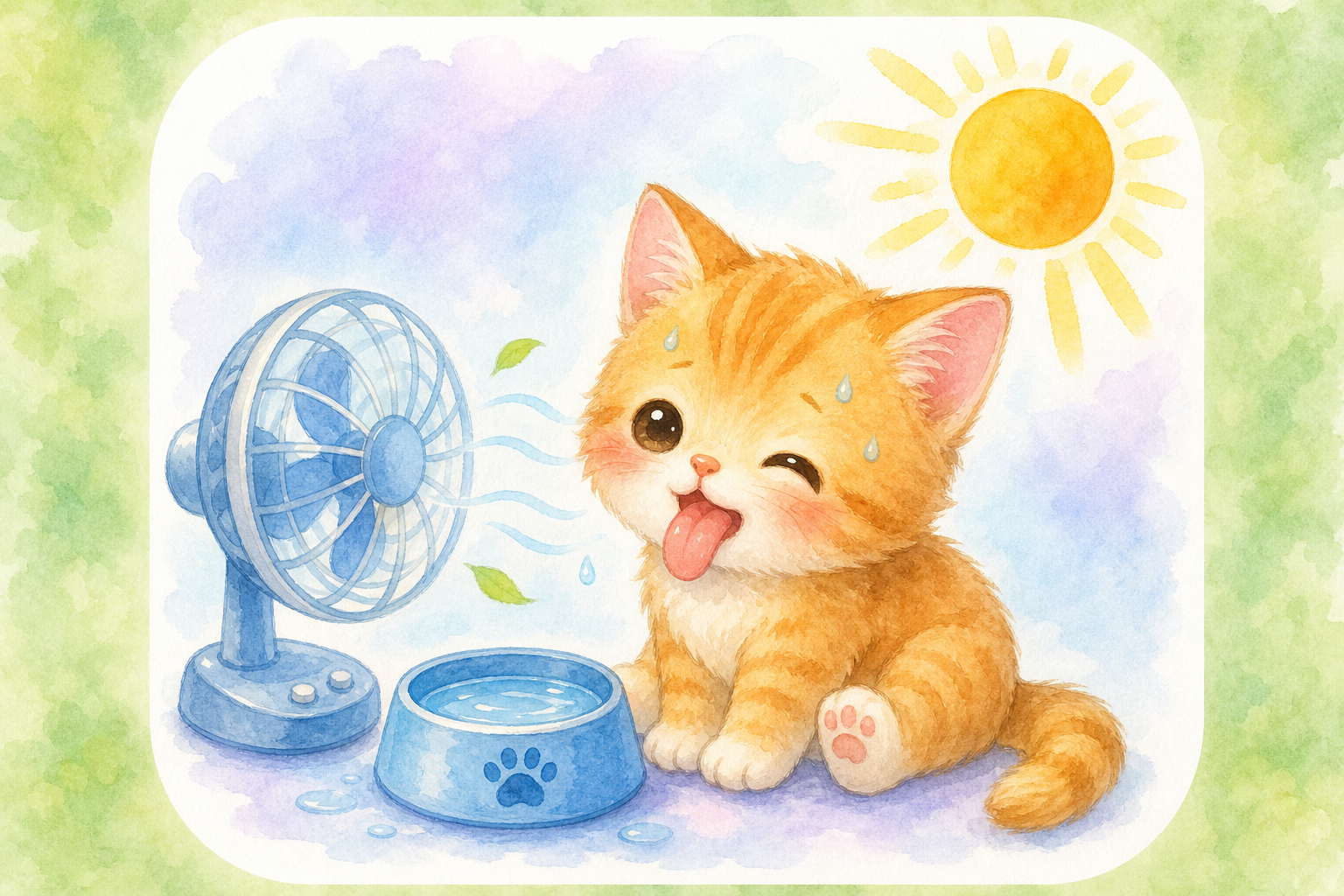
Cats are less likely than dogs to pant, so visible panting or distress in heat may signal a serious problem. Heat-related illness can occur in hot cars, poorly ventilated rooms, or during heat waves — especially for kittens, senior cats, or overweight cats. While moving to a cooler environment may help, veterinary evaluation is often needed to assess internal effects.
Recommended timing
Act now — seek emergency veterinary care immediately if any severe signs above are present.
When emergency veterinary care may be appropriate
- Collapse, weakness, or inability to stand
- Open-mouth breathing or panting that does not improve in a cooler area
- Vomiting, diarrhea, or drooling
- Bright red, pale, or blue-tinged gums
- Confusion, stumbling, or seizures
- Your cat was in a hot car, enclosed space, or without shade and water
What to tell your veterinarian
- Estimated temperature and duration of exposure
- What symptoms you are seeing and when they started
- Whether your cat has cooled down and how
- Any water offered and whether it was kept down
- Your cat's age, weight, and medical history
What to have ready
- Your pet's current weight (or a recent estimate)
- List of medications your pet takes
- When symptoms started or when exposure occurred
- Any packaging, labels, or product information (for toxins or foreign objects)
- Photos or videos of symptoms, if safe to capture
- Estimated temperature and duration of heat exposure
What not to do
- Do not leave your cat in a parked car
- Do not assume cats tolerate heat better because they seem calm
- Do not delay veterinary contact if collapse or severe symptoms are present
- Do not rely solely on online cooling instructions without professional guidance
Learn more from trusted sources
These are educational resources from licensed veterinary organizations and animal poison control experts. Paw Navigator is not affiliated with or endorsed by these third-party sites.