
Important
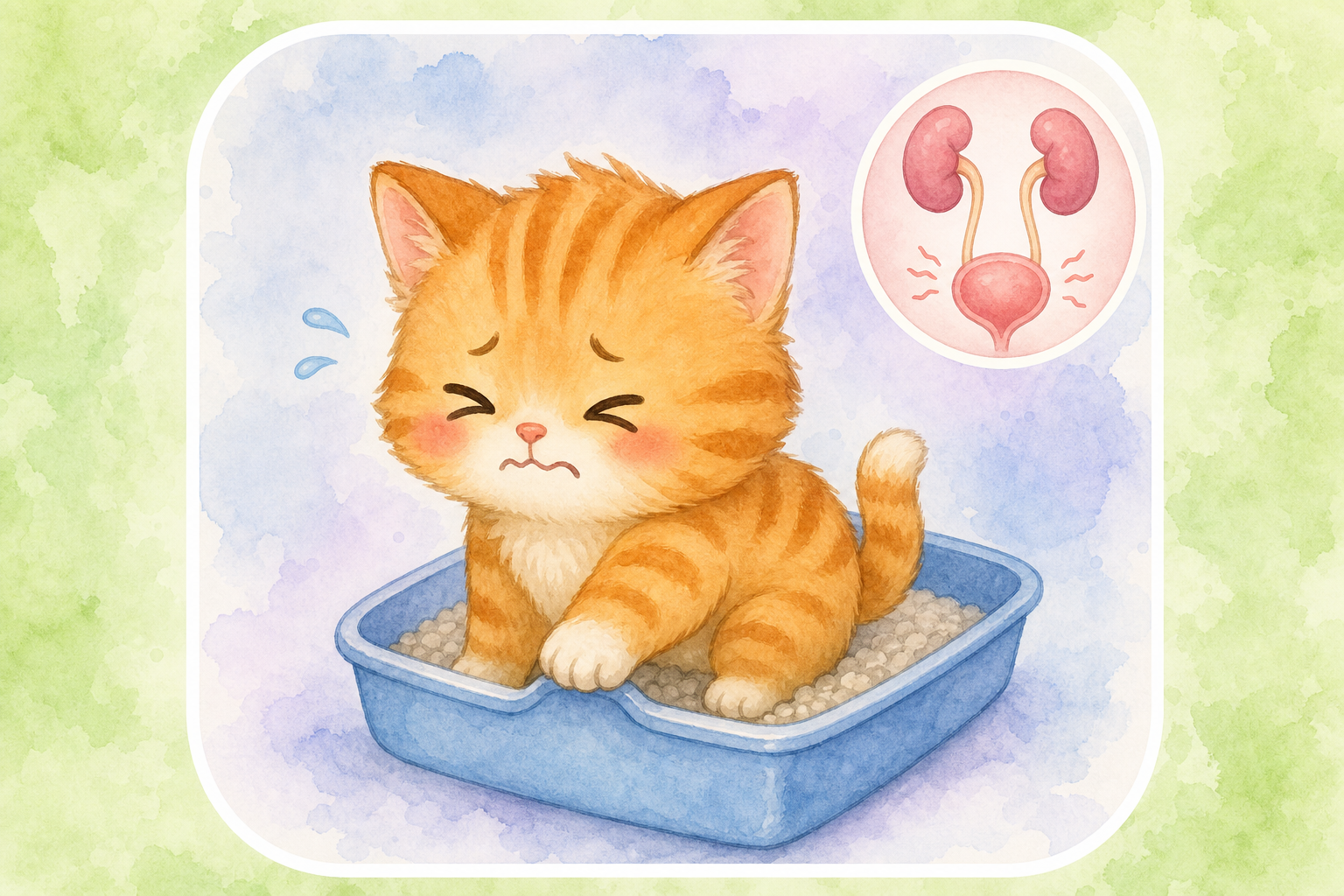
A male cat straining in the litter box, crying, or producing little or no urine may have a urinary blockage. This can be life-threatening. Seek emergency veterinary care immediately.
Overview
Urinary blockages are more common in male cats but can affect any cat. Signs may include frequent trips to the litter box, straining, crying, licking the genital area, or urinating outside the box in small amounts. Because toxins can build up when a cat cannot urinate, this situation is often treated as an emergency.
Recommended timing
Act now — seek emergency veterinary care immediately if any severe signs above are present.
When emergency veterinary care may be appropriate
- Straining to urinate with little or no urine produced
- Crying or vocalizing in the litter box
- Repeated trips to the litter box without success
- Lethargy, vomiting, or hiding alongside litter box changes
- A male cat with any suspected difficulty urinating
- You have not seen urine in the litter box for 24 hours or more
What to tell your veterinarian
- When you first noticed straining or litter box changes
- Whether any urine was produced and how much
- Your cat's sex, age, and neuter status
- Any prior urinary or bladder issues
- Appetite, vomiting, or behavior changes
- Current diet and water intake
What to have ready
- Your pet's current weight (or a recent estimate)
- List of medications your pet takes
- When symptoms started or when exposure occurred
- Any packaging, labels, or product information (for toxins or foreign objects)
- Photos or videos of symptoms, if safe to capture
- Litter box habits and last time urine was seen
What not to do
- Do not wait to see if your cat passes urine on their own
- Do not assume litter box avoidance is only behavioral
- Do not give human urinary medications
- Do not delay because your cat is still eating
Learn more from trusted sources
These are educational resources from licensed veterinary organizations and animal poison control experts. Paw Navigator is not affiliated with or endorsed by these third-party sites.