
Important
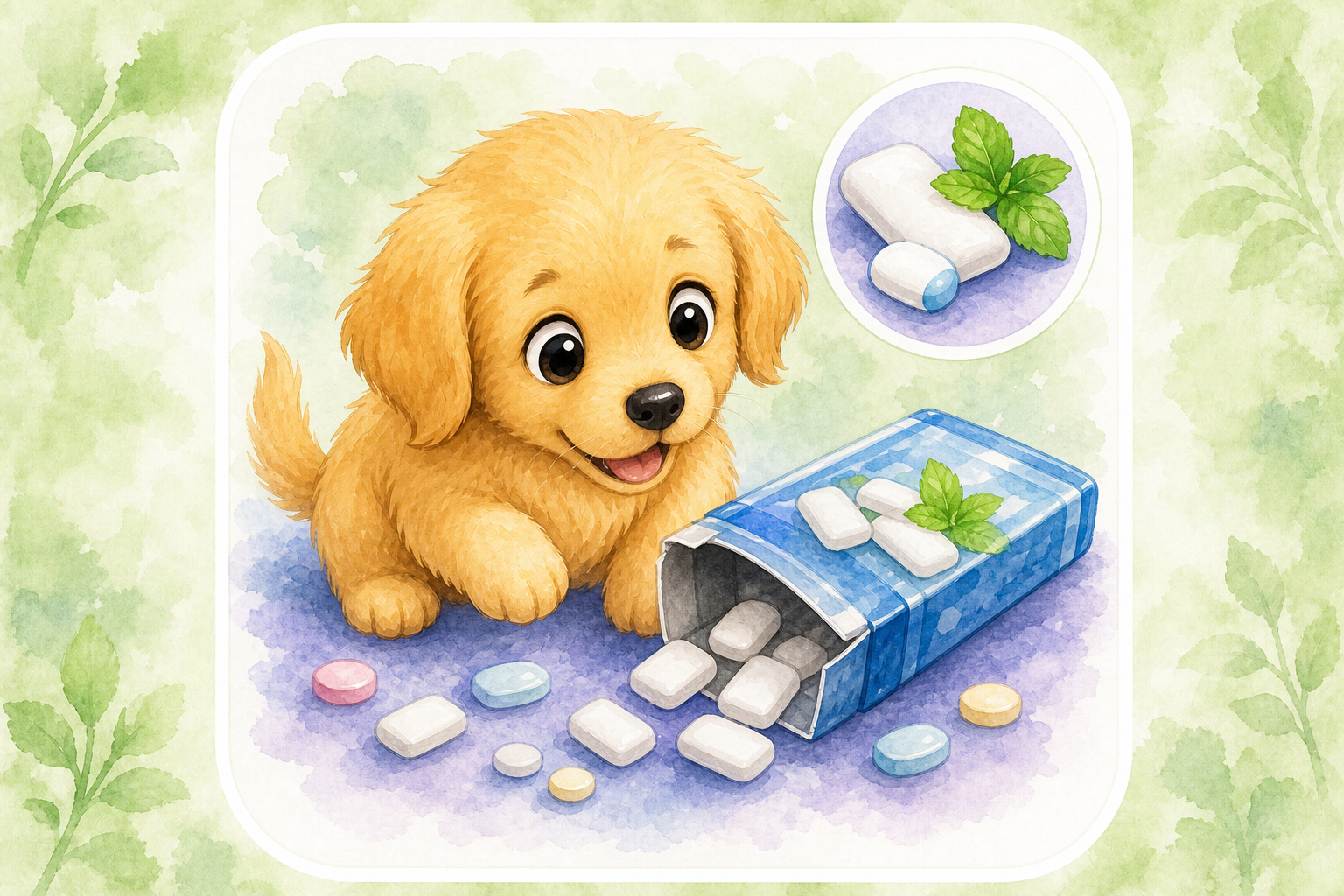
Xylitol — found in many sugar-free gums, candies, peanut butters, and baked goods — can be harmful to dogs. Contact a veterinarian, emergency veterinary hospital, or animal poison control immediately.
Overview
Xylitol can cause serious effects in dogs, including low blood sugar and liver injury. The amount relative to your dog's weight and the specific product matter. Effects may not appear immediately. Prompt veterinary or poison control guidance helps determine whether emergency evaluation is needed.
Recommended timing
Act now — seek emergency veterinary care immediately if any severe signs above are present.
When emergency veterinary care may be appropriate
- Any suspected xylitol ingestion, especially in smaller dogs
- Sugar-free gum, candy, peanut butter, or baked goods was involved
- Your dog is vomiting, weak, unsteady, or lethargic
- You are unsure how much was eaten or cannot reach your veterinarian
- Your dog is very small or has existing liver conditions
- You find chewed packaging but are unsure of the amount
What to tell your veterinarian
- Your dog's breed, age, and weight
- The product name and whether xylitol is listed in ingredients
- Estimated amount eaten and when it happened
- Any packaging or ingredient label you can share
- Current symptoms, even if mild
What to have ready
- Your pet's current weight (or a recent estimate)
- List of medications your pet takes
- When symptoms started or when exposure occurred
- Any packaging, labels, or product information (for toxins or foreign objects)
- Photos or videos of symptoms, if safe to capture
- Product packaging or ingredient list showing xylitol
What not to do
- Do not assume your dog is fine because they act normal right now
- Do not attempt home remedies or induce vomiting unless specifically directed by a veterinarian
- Do not wait until symptoms worsen before calling for guidance
- Do not rely on online advice instead of contacting a licensed veterinarian or poison control
Learn more from trusted sources
These are educational resources from licensed veterinary organizations and animal poison control experts. Paw Navigator is not affiliated with or endorsed by these third-party sites.