
Important
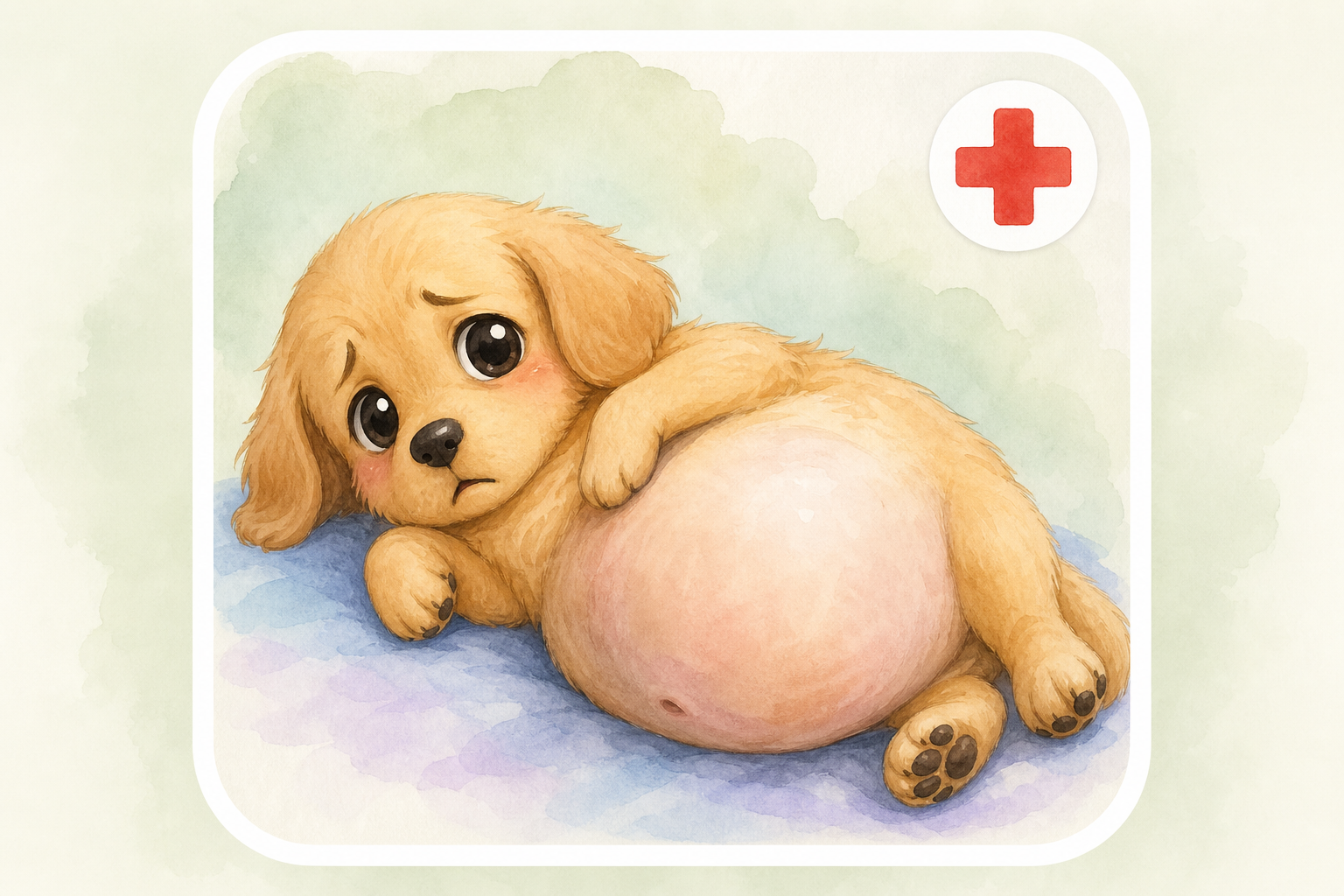
A distended abdomen with restlessness, retching, or distress may represent a life-threatening emergency. Seek emergency veterinary care immediately.
Overview
A bloated or tight abdomen in dogs — especially large or deep-chested breeds — can be associated with serious conditions including gastric dilatation. Signs may include a swollen belly, unsuccessful attempts to vomit, pacing, drooling, or signs of pain. Because progression can be rapid, emergency evaluation is often recommended when these signs are present.
Recommended timing
Act now — seek emergency veterinary care immediately if any severe signs above are present.
When emergency veterinary care may be appropriate
- Visible abdominal swelling or a hard, distended belly
- Retching or attempts to vomit without producing anything
- Restlessness, pacing, or obvious discomfort
- Pale gums, weakness, or collapse
- Rapid breathing or drooling
- Any bloating signs in a deep-chested breed
What to tell your veterinarian
- When symptoms started and how they have changed
- Breed, age, and size of your dog
- Recent meals, exercise, and water intake
- Whether your dog has had similar episodes before
- Current gum color if you can check safely
What to have ready
- Your pet's current weight (or a recent estimate)
- List of medications your pet takes
- When symptoms started or when exposure occurred
- Any packaging, labels, or product information (for toxins or foreign objects)
- Photos or videos of symptoms, if safe to capture
- Breed, recent meals, and when symptoms started
What not to do
- Do not wait to see if the bloating resolves on its own
- Do not give food or water if your dog is retching or distressed
- Do not delay because your dog ate recently — timing can be critical
- Do not attempt home remedies
Learn more from trusted sources
These are educational resources from licensed veterinary organizations and animal poison control experts. Paw Navigator is not affiliated with or endorsed by these third-party sites.