
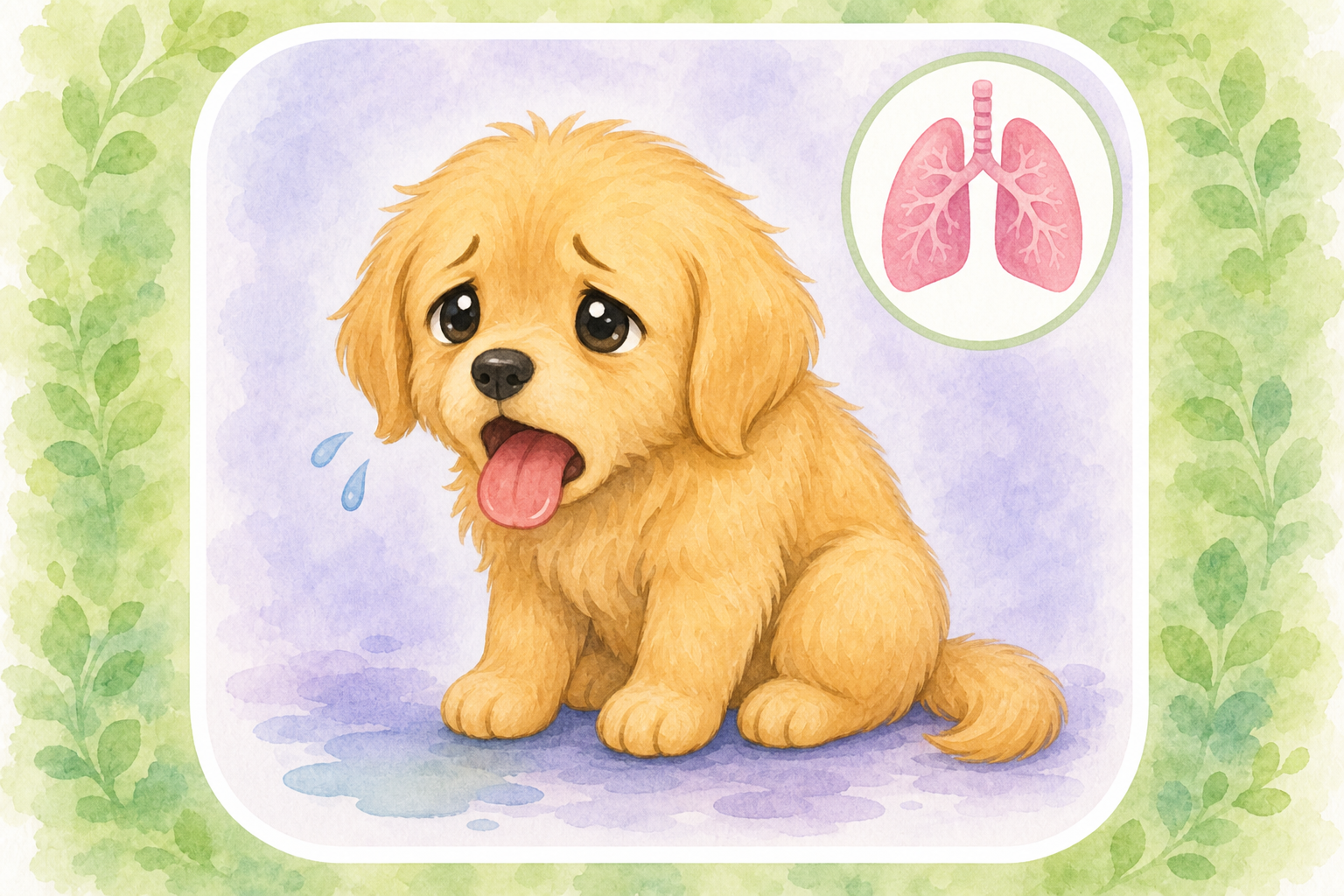
Important
Labored breathing, pale or blue gums, or collapse may be life-threatening. Seek emergency veterinary care immediately.
Overview
Dogs may pant after exercise or heat, but persistent labored breathing, coughing with distress, or breathing that does not improve in a cooler area may signal a serious problem. Respiratory distress can progress quickly. Because difficulty breathing may indicate heart, airway, or other urgent conditions, emergency evaluation is often appropriate when severe signs are present.
Recommended timing
Act now — seek emergency veterinary care immediately if any severe signs above are present.
When emergency veterinary care may be appropriate
- Labored, rapid, or visibly distressed breathing
- Pale, blue, or gray gums
- Collapse, weakness, or inability to settle
- Choking, known trauma, or something stuck in the mouth
- Breathing difficulty combined with coughing up foam or blood
- Sudden onset after heat exposure or possible toxin contact
What to tell your veterinarian
- When breathing changes started and how they have changed
- Whether your dog was exercising, in heat, or resting
- Any coughing, gagging, or noise while breathing
- Recent stress, travel, or environmental changes
- Your dog's breed, age, weight, and medical history
- Current gum color if you can check safely
What to have ready
- Your pet's current weight (or a recent estimate)
- List of medications your pet takes
- When symptoms started or when exposure occurred
- Any packaging, labels, or product information (for toxins or foreign objects)
- Photos or videos of symptoms, if safe to capture
- Note whether breathing is open-mouth or labored
What not to do
- Do not wait to see if breathing improves on its own
- Do not force exercise or stress your dog further
- Do not assume panting after heat is always normal if it does not improve
- Do not delay because your dog is still walking around
Learn more from trusted sources
These are educational resources from licensed veterinary organizations and animal poison control experts. Paw Navigator is not affiliated with or endorsed by these third-party sites.