
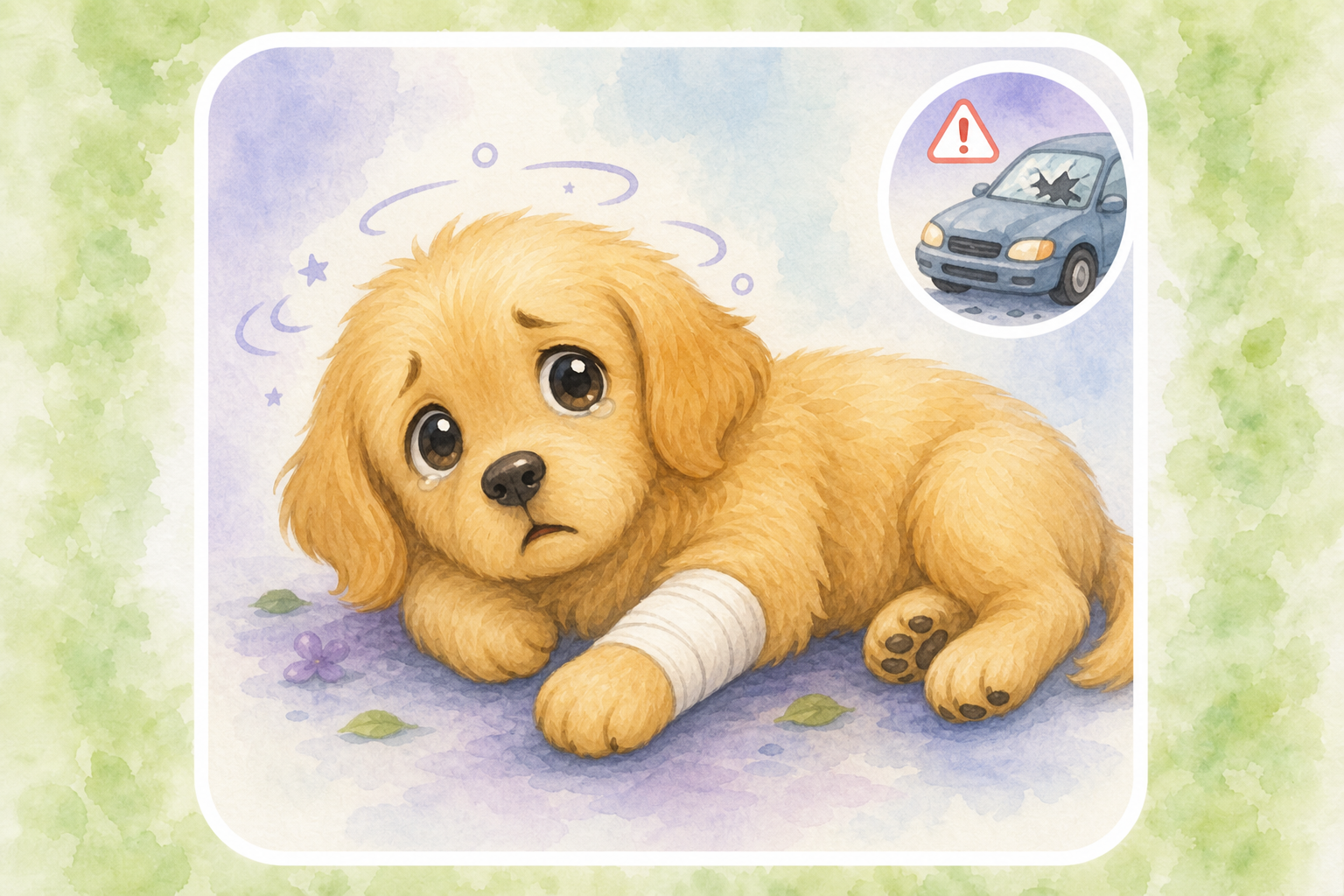
Important
Trauma can cause internal injuries even when your dog walks afterward. Contact a veterinarian or emergency veterinary hospital immediately.
Overview
Dogs who are hit by a vehicle, fall from a height, or suffer other significant trauma may have fractures, internal bleeding, lung injury, or other serious problems. Some injuries are not obvious immediately. A dog who seems stable at first may worsen over hours. Emergency veterinary evaluation is often recommended after any significant trauma, especially if your dog is limping, breathing oddly, bleeding, or in pain.
Recommended timing
Act now — seek emergency veterinary care immediately if any severe signs above are present.
When emergency veterinary care may be appropriate
- Your dog is unconscious or having trouble breathing
- Visible wounds, bleeding, or obvious signs of pain
- Unable to stand or walk normally
- Pale gums, collapse, or severe distress
- Hit by a vehicle, significant fall, or dog fight with serious injury
- Vomiting, lethargy, or behavior changes after trauma
What to tell your veterinarian
- What happened and approximate time of the injury
- How your dog has behaved since the trauma
- Any visible injuries, bleeding, or limping
- Breathing changes or gum color if checked safely
- Your dog's breed, age, weight, and medical history
- Whether your dog has eaten, drunk water, or urinated normally since
What to have ready
- Your pet's current weight (or a recent estimate)
- List of medications your pet takes
- When symptoms started or when exposure occurred
- Any packaging, labels, or product information (for toxins or foreign objects)
- Photos or videos of symptoms, if safe to capture
- How the injury happened and approximate time
What not to do
- Do not assume your dog is fine because they walked away from the scene
- Do not give human pain medications
- Do not force extensive handling if your dog is painful or scared
- Do not wait until the next day if breathing difficulty, bleeding, or limping is present
Learn more from trusted sources
These are educational resources from licensed veterinary organizations and animal poison control experts. Paw Navigator is not affiliated with or endorsed by these third-party sites.